Artificial Intelligence is no longer a future concept. It is already shaping industries, careers, and daily life. As we move closer to 2026, the demand for AI-related skills is growing faster than any other technology field. Companies are not only looking for AI engineers anymore; they want professionals who understand how to work with AI, not just build it.
Learning the best AI skills 2026 will not be optional. It will be necessary for anyone who wants to stay relevant in the job market, build scalable businesses, or work on future-ready projects.
This guide explains the most important AI skills you should focus on in 2026, why they matter, and how they will impact careers across industries.
Why AI Skills Will Matter More in 2026 Than Ever Before
AI systems are becoming more autonomous, more accurate, and more integrated into everyday tools. In 2026, AI will not replace humans completely, but it will replace people who do not know how to use AI.
Organizations want individuals who can:
- Understand AI outputs
- Apply AI to real-world problems
- Work alongside intelligent systems
- Make ethical and strategic decisions using AI
That is why best AI skills 2026 are not limited to coding alone. They include thinking, creativity, data understanding, and problem-solving.
Understanding the New Definition of AI Skills
Earlier, AI skills meant programming and mathematics. In 2026, AI skills will include a combination of technical knowledge, strategic thinking, and practical application.
AI will be used in:
- Healthcare
- Finance
- Marketing
- Education
- Manufacturing
- Content creation
- Cybersecurity
This expansion has changed what “AI skills” truly mean.
1. Prompt Engineering and AI Communication
One of the most important best AI skills 2026 is prompt engineering. AI systems depend heavily on how instructions are given.
People who know how to communicate clearly with AI systems will get better results than those who do not.
This skill includes:
- Writing precise instructions
- Structuring complex prompts
- Understanding AI limitations
- Refining outputs through iteration
Prompt engineering is becoming a core professional skill, not just a technical one.
2. AI Literacy and Model Understanding
AI literacy means understanding how AI works without necessarily building models from scratch. In 2026, professionals will be expected to know:
- How AI models learn
- What data bias means
- How predictions are generated
- Where AI can fail
This is one of the best AI skills 2026 because it helps people make smarter decisions and avoid blind trust in AI outputs.
3. Data Interpretation and Decision Making
AI produces insights, not decisions. Humans still make the final call.
Knowing how to interpret AI-generated data is critical. This includes:
- Reading AI dashboards
- Understanding probability and confidence scores
- Identifying errors or anomalies
- Translating insights into actions
Without this skill, AI data becomes meaningless.
4. AI-Assisted Content Creation
In 2026, content creation will not disappear, but it will evolve. Writers, designers, and creators will use AI as an assistant, not a replacement.
AI-assisted content skills include:
- Structuring long-form content
- Editing and refining AI drafts
- Maintaining originality
- Ensuring factual accuracy
This is among the best AI skills 2026 because content demand is increasing across platforms.
5. Ethical AI Awareness
Ethical understanding of AI will become mandatory. Governments and companies are already focusing on responsible AI usage.
Ethical AI skills include:
- Understanding data privacy
- Avoiding algorithmic bias
- Ensuring transparency
- Using AI responsibly
Professionals who understand ethical boundaries will be highly valued.
6. AI Automation and Workflow Design
Automation is one of AI’s biggest strengths. In 2026, knowing how to design AI-powered workflows will be a major advantage.
This includes:
- Automating repetitive tasks
- Integrating AI tools into workflows
- Improving efficiency
- Reducing human error
Workflow design is one of the best AI skills 2026 because it directly impacts productivity.
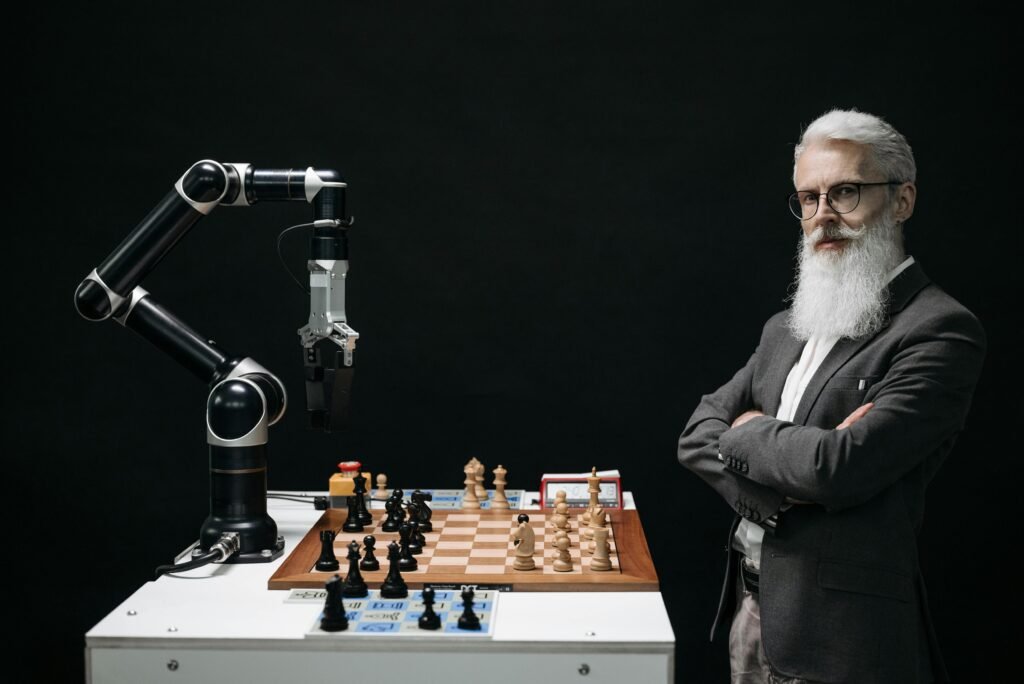
7. Human-AI Collaboration Skills
AI works best when humans collaborate with it. This skill focuses on knowing:
- What tasks AI should handle
- What tasks humans should handle
- How to combine strengths
People who master collaboration will outperform those who either fear AI or rely on it completely.
8. Critical Thinking in the Age of AI
AI can generate information, but it cannot judge truth, context, or consequences like humans can.
Critical thinking includes:
- Questioning AI outputs
- Verifying information
- Applying human judgment
- Avoiding misinformation
This is one of the most underrated best AI skills 2026, yet one of the most important.
9. AI for Problem Solving
AI is not just about automation. It is about solving complex problems.
Problem-solving skills include:
- Defining the right problem
- Using AI tools effectively
- Testing multiple approaches
- Evaluating outcomes
AI becomes powerful only when applied to meaningful problems.
10. Continuous Learning and Adaptability
AI evolves rapidly. Skills learned today may change tomorrow.
Adaptability includes:
- Learning new tools quickly
- Updating knowledge regularly
- Experimenting with new systems
- Staying flexible
This mindset is one of the best AI skills 2026 because AI will never stop evolving.
How These AI Skills Impact Future Careers
Careers will not disappear, but job roles will change.
People with strong AI skills will:
- Work faster
- Make better decisions
- Create more value
- Stay competitive
Those without AI skills may struggle to keep up.
AI Skills vs Traditional Skills
Traditional skills alone will not be enough in 2026. AI skills will complement them.
For example:
- Marketers will need AI analytics
- Designers will need AI tools
- Managers will need AI insights
- Educators will need AI platforms
The combination creates powerful professionals.
How to Start Building AI Skills Today
You do not need to master everything at once. Start small:
- Learn how AI tools work
- Practice prompt writing
- Understand AI outputs
- Apply AI in daily tasks
Consistency matters more than speed.
Common Mistakes People Make While Learning AI
Avoid these mistakes:
- Blindly trusting AI
- Ignoring fundamentals
- Overloading with tools
- Skipping ethical understanding
Balanced learning leads to long-term success.
The Future of AI Skills Beyond 2026
AI will continue to expand into new areas. Skills learned now will act as a foundation for future growth.
People who master the best AI skills 2026 will be better prepared for whatever comes next.
Why AI Skills Will Decide Career Growth in 2026
By 2026, artificial intelligence will no longer be an optional skill. It will be a core requirement across industries. Companies are already shifting toward automation, data-driven decision-making, and intelligent systems.
Professionals who understand best AI skills 2026 will have more career flexibility, higher income potential, and stronger job security. AI will not replace people — people with AI skills will replace those without them.
This is why learning AI skills early gives a massive advantage.
AI Skills vs Traditional Skills: The Future Difference
Traditional skills depend heavily on manual effort and repetitive tasks. AI-driven skills focus on problem-solving, optimization, and intelligent automation.
In 2026, employers will value:
- Decision-making with data
- Automation capability
- AI-assisted productivity
- Creative problem-solving
Learning best AI skills 2026 prepares you for this shift.
How Long Does It Take to Learn AI Skills?
The time required depends on consistency and focus.
- Basic AI understanding: 2–3 months
- Intermediate AI skills: 6–9 months
- Advanced AI expertise: 12+ months
You don’t need to master everything. Even one strong AI skill can create opportunities.
Common Myths About Learning AI Skills
Many people avoid AI because of misconceptions.
Myth 1: AI is only for programmers
Reality: Many AI tools require no coding at all.
Myth 2: AI skills are too difficult
Reality: Modern platforms simplify learning.
Myth 3: AI will replace jobs
Reality: AI creates new roles faster than it removes old ones.
Understanding these facts helps you confidently learn best AI skills 2026.
How AI Skills Improve Productivity
AI tools can complete tasks faster, with fewer errors. This allows professionals to focus on strategy and creativity.
AI improves productivity by:
- Automating repetitive work
- Enhancing research accuracy
- Improving content quality
- Speeding up decision-making
This productivity advantage will define success in 2026.
AI Skills for Non-Technical Professionals
AI is not limited to engineers. Non-technical professionals can also benefit.
Useful AI skills include:
- AI-powered research
- Content optimization
- Data interpretation
- Workflow automation
These skills increase efficiency without requiring technical backgrounds.
How Businesses Will Use AI Skills in 2026
Businesses will rely heavily on AI for:
- Customer behavior analysis
- Marketing optimization
- Financial forecasting
- Product development
- Customer support automation
Employees with best AI skills 2026 will be essential to these processes.
The Role of Creativity in AI Skills
AI enhances creativity rather than replacing it. Humans provide ideas, emotions, and context, while AI handles execution and analysis.
In 2026, creativity combined with AI will be a powerful combination.
AI Skills and Career Stability
Job stability will depend on adaptability. AI-skilled individuals can switch roles, industries, and responsibilities more easily.
Learning best AI skills 2026 protects against career uncertainty.
Ethical Understanding: A Hidden AI Skill
Understanding ethical AI usage will be crucial. Businesses will seek professionals who can balance innovation with responsibility.
Ethical AI skills include:
- Data privacy awareness
- Bias detection
- Responsible automation
This makes professionals more valuable.
How to Practice AI Skills Daily
Learning AI is not about theory alone.
Daily practice ideas:
- Use AI tools for daily tasks
- Experiment with automation
- Analyze AI-generated outputs
- Improve workflows using AI
Consistency matters more than speed.
AI Skills and Freelancing Opportunities
AI skills open doors to remote and freelance work. Many businesses prefer AI-skilled freelancers to reduce costs.
Freelancers with best AI skills 2026 will be in high demand globally.
How AI Skills Support Business Growth
AI helps businesses scale faster by improving efficiency and reducing errors.
Benefits include:
- Faster decision-making
- Lower operational costs
- Higher accuracy
- Better customer experience
AI-skilled professionals drive this growth.
Future-Proofing Your Career With AI
The best way to future-proof your career is continuous learning. AI evolves rapidly, and staying updated is essential.
Those who learn best AI skills 2026 will stay ahead of industry changes.
Learning Strategy for AI Skills in 2026
A smart strategy includes:
- Understanding fundamentals
- Practicing real-world use cases
- Improving problem-solving ability
- Staying updated with trends
Avoid information overload. Focus on skill application.
How AI Skills Improve Decision-Making
AI provides insights that humans may overlook. Better data analysis leads to better decisions.
This advantage will separate average professionals from top performers.
Long-Term Benefits of AI Skills
AI skills offer:
- Higher income potential
- Career flexibility
- Global opportunities
- Skill relevance for years
This makes learning best AI skills 2026 a smart investment.
Final Thoughts Before Conclusion
Artificial intelligence is shaping the future faster than expected. Waiting too long to learn AI skills can limit opportunities.
Starting now builds confidence, competence, and career security.
Final Conclusion
The demand for best AI skills 2026 will grow rapidly across all industries. These skills are no longer optional — they are essential for professional success.
Whether you aim for career growth, job stability, or personal productivity, AI skills provide a powerful advantage. Those who adapt early will lead the future, while others will follow.
The future belongs to those who learn, adapt, and apply AI intelligently.