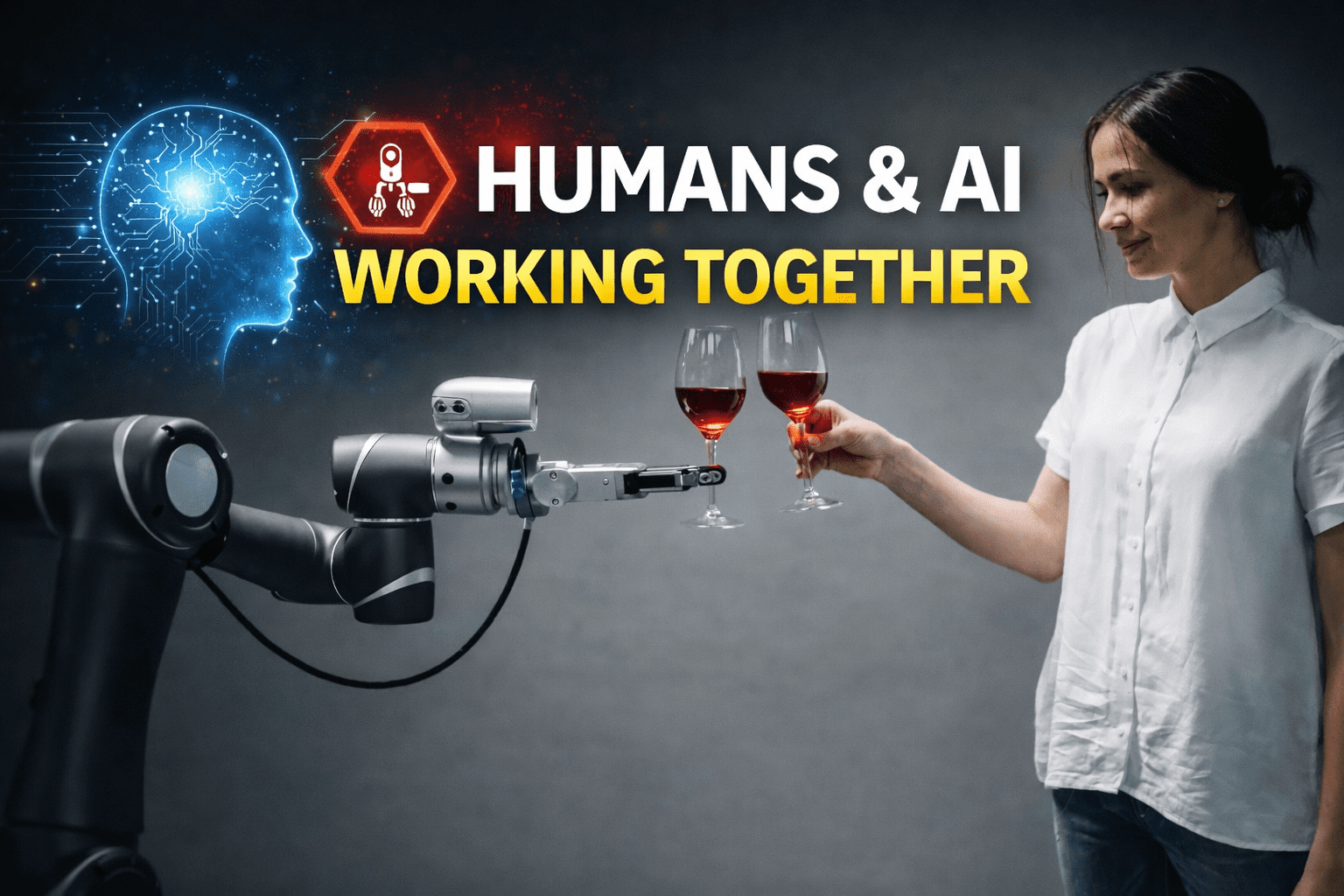
Artificial Intelligence is no longer a distant concept or a futuristic dream. It has already become a powerful part of everyday life. From smart assistants to automated systems, AI is transforming industries at an unprecedented speed. However, the most important shift is not about AI replacing humans. It is about the human AI collaboration future, where humans and artificial intelligence work together to achieve better results.
This article explores how this collaboration will shape the future of work, creativity, decision-making, education, healthcare, and society as a whole.
Understanding Human–AI Collaboration
Human–AI collaboration refers to a working model where humans and artificial intelligence complement each other’s strengths. Humans bring creativity, emotional intelligence, ethics, and critical thinking. AI contributes speed, accuracy, data processing, and pattern recognition.
Instead of competition, the human AI collaboration future focuses on cooperation. AI handles repetitive and data-heavy tasks, while humans focus on strategic, creative, and value-driven decisions.
This partnership creates a balanced system where productivity increases without sacrificing human judgment.
Why Human–AI Collaboration Is the Future
The complexity of modern problems requires both human insight and machine intelligence. AI alone lacks emotional understanding and ethical reasoning. Humans alone cannot process massive amounts of data at machine speed.
That is why the future of human and AI collaboration is inevitable.
Key reasons include:
- Growing data volumes
- Increasing need for efficiency
- Demand for personalized solutions
- Rapid technological advancement
Collaboration allows organizations and individuals to adapt faster and perform better.
Human Strengths vs AI Strengths
Understanding the strengths of both sides explains why collaboration works.
Human Strengths
- Creativity and imagination
- Emotional intelligence
- Ethical judgment
- Contextual understanding
- Complex problem-solving
AI Strengths
- Data analysis at scale
- Speed and automation
- Pattern recognition
- Accuracy and consistency
- Continuous learning
The human AI collaboration future emerges when these strengths are combined effectively.
Human–AI Collaboration in the Workplace
The workplace is already experiencing major changes. AI tools assist with data analysis, scheduling, customer support, and decision support systems.
Rather than eliminating jobs, AI is reshaping them. Many roles are evolving into AI-assisted professions, where humans guide and supervise intelligent systems.
Examples include:
- Analysts using AI for insights
- Designers using AI for ideation
- Engineers working with predictive systems
- Managers using AI-driven dashboards
The future workplace values adaptability and collaboration with technology.
How AI Enhances Human Decision-Making
AI does not make final decisions in a collaborative model. Instead, it provides recommendations based on data.
Humans remain responsible for:
- Interpreting AI outputs
- Applying ethical reasoning
- Making final judgments
This approach improves accuracy while maintaining accountability. In the human AI collaboration future, AI acts as an intelligent advisor, not a replacement.
Human–AI Collaboration in Healthcare
Healthcare is one of the most impactful areas of collaboration. AI assists doctors by analyzing medical images, predicting risks, and managing patient data.
However, human doctors remain essential for:
- Patient interaction
- Emotional support
- Ethical decisions
- Complex diagnoses
The collaboration leads to faster diagnoses, personalized treatments, and improved patient outcomes.
Education in the Human–AI Collaboration Future
Education systems are also transforming. AI enables personalized learning experiences by adapting content to individual needs.
Teachers benefit by:
- Saving time on administrative tasks
- Identifying learning gaps
- Enhancing classroom engagement
Human educators remain irreplaceable for mentorship, motivation, and critical thinking development. The future of human AI collaboration in education focuses on empowering teachers, not replacing them.
Creativity and AI: Collaboration, Not Competition
One of the biggest myths is that AI will replace human creativity. In reality, AI expands creative possibilities.
Artists, writers, and designers use AI to:
- Generate ideas
- Explore variations
- Speed up workflows
Humans provide vision, meaning, and emotional depth. AI provides tools and inspiration. Together, they redefine creativity in the human AI collaboration future.
Ethical Considerations in Human–AI Collaboration
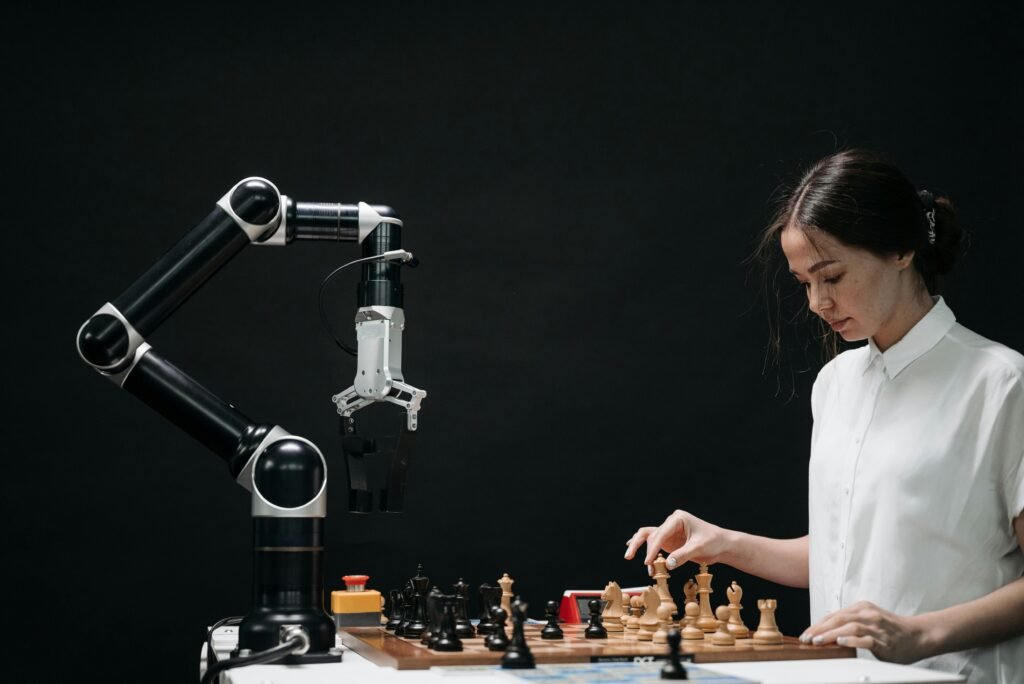
Ethics play a crucial role in collaboration. AI systems must align with human values.
Key ethical priorities include:
- Transparency
- Fairness
- Privacy protection
- Accountability
Humans must guide AI development responsibly. Ethical oversight ensures that collaboration benefits society rather than causing harm.
Skills Needed for the Human–AI Collaboration Future
To thrive in the future, individuals need to develop new skills.
Important skills include:
- Critical thinking
- Digital literacy
- Adaptability
- Emotional intelligence
- Ethical reasoning
Learning how to work with AI tools becomes as important as traditional skills. The future favors those who can collaborate with technology effectively.
Human–AI Collaboration and Business Innovation
Businesses that embrace collaboration gain a competitive advantage. AI-driven insights help identify trends, optimize operations, and improve customer experiences.
Human leadership remains essential for:
- Vision setting
- Strategic planning
- Cultural development
The human AI collaboration future enables smarter, faster, and more innovative businesses.
Will AI Replace Humans?
This is one of the most common questions. The reality is that AI replaces tasks, not humans.
Jobs that involve repetitive activities may change, but new roles emerge that require human creativity and oversight.
The future belongs to those who adapt and learn how to collaborate with AI rather than fear it.
Challenges in Human–AI Collaboration
Despite its benefits, collaboration faces challenges.
Common challenges include:
- Bias in AI systems
- Lack of transparency
- Skill gaps
- Ethical concerns
Addressing these challenges requires responsible development and continuous learning.
The Long-Term Vision of Human–AI Collaboration
The long-term vision is a society where AI enhances human potential. Productivity increases, creativity expands, and complex problems become manageable.
The human AI collaboration future aims to improve quality of life, not replace human purpose.
How Society Will Change
Collaboration between humans and AI will reshape social structures. Work-life balance may improve as automation reduces workload.
Education, healthcare, and governance systems will become more efficient and inclusive.
However, human values must remain at the center of progress.
Human–AI Collaboration in Everyday Life
AI already assists with daily activities such as navigation, communication, and organization. As collaboration deepens, AI becomes more personalized and supportive.
Humans retain control while benefiting from intelligent assistance.
Preparing for the Human–AI Collaboration Future
Preparation involves mindset and skills.
Key steps include:
- Embracing lifelong learning
- Understanding AI fundamentals
- Developing human-centric skills
- Staying ethically aware
Those who prepare early gain long-term advantages.
Human–AI Collaboration Future: How Humans and Artificial Intelligence Will Work Together
The future of technology is not about humans versus machines. It is about humans working together with artificial intelligence to solve complex problems, improve productivity, and create new opportunities. The human AI collaboration future represents a powerful shift in how work, creativity, education, healthcare, and decision-making will evolve over the coming decades.
Rather than replacing humans, artificial intelligence is increasingly designed to augment human abilities. This collaboration combines human creativity, judgment, and emotional intelligence with AI’s speed, accuracy, and data-processing power. Together, they form a partnership that is stronger than either could be alone.
Understanding Human–AI Collaboration
Human–AI collaboration refers to systems where humans and artificial intelligence work side by side, each contributing their unique strengths. Humans provide context, ethics, creativity, and intuition, while AI contributes computation, pattern recognition, and automation.
In the human AI collaboration future, AI acts less like a replacement and more like a co-worker, assistant, or decision-support partner. This model changes how tasks are performed and how value is created across industries.
Why Human–AI Collaboration Is the Future
Technology has always evolved to assist humans. From calculators to computers, tools have expanded human capability. Artificial intelligence is simply the next stage of this evolution.
Several factors make human–AI collaboration inevitable:
- Growing data complexity
- Faster decision-making requirements
- Need for precision and scalability
- Demand for innovation
- Global competition
AI can analyze vast amounts of data in seconds, but it lacks human judgment, ethics, and emotional understanding. This is why the future of human and AI working together is more realistic than full automation.
Key Strengths Humans Bring to AI Collaboration
In the human AI collaboration future, humans remain essential because of qualities AI cannot replicate.
Human Creativity and Innovation
Humans excel at original thinking, imagination, and creative problem-solving. AI can generate ideas based on patterns, but true innovation still comes from human insight.
Emotional Intelligence
Empathy, compassion, and social understanding are uniquely human. These traits are crucial in leadership, healthcare, education, and communication.
Ethical Judgment
AI follows rules and data. Humans define values, ethics, and responsibility. Human oversight ensures AI systems are used fairly and safely.
What AI Contributes to Human Collaboration
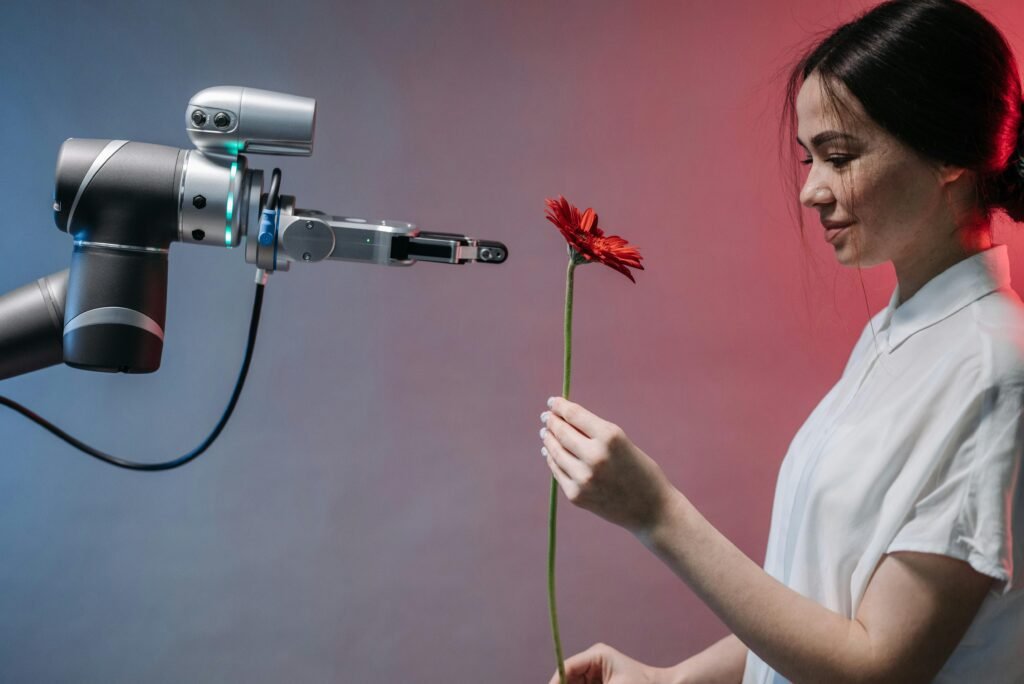
Artificial intelligence brings powerful capabilities that enhance human performance.
Speed and Efficiency
AI processes information far faster than humans, reducing time spent on repetitive tasks.
Pattern Recognition
AI identifies trends and correlations in data that humans may overlook.
Consistency and Accuracy
AI reduces human error, especially in data-driven tasks.
These strengths make AI an ideal partner rather than a competitor in the human AI collaboration future.
Human–AI Collaboration in the Workplace
The workplace will experience one of the biggest transformations through human–AI collaboration.
Smarter Decision-Making
AI provides data-driven insights, while humans make final decisions based on experience and context.
Augmented Roles, Not Replaced Jobs
Jobs will evolve rather than disappear. Many roles will shift toward managing, interpreting, and guiding AI systems.
Increased Productivity
AI handles routine tasks, allowing humans to focus on strategy, creativity, and problem-solving.
The future of human and AI working together creates new job categories and skill demands rather than mass unemployment.
Human–AI Collaboration in Healthcare
Healthcare is a clear example of how collaboration outperforms automation.
AI can analyze medical images, detect patterns, and predict risks. However, doctors provide diagnosis confirmation, empathy, and ethical care decisions.
In the human AI collaboration future, AI assists doctors, nurses, and researchers rather than replacing them. This leads to better patient outcomes and reduced workload.
Human–AI Collaboration in Education
Education will also transform through collaboration.
AI can personalize learning paths, identify weaknesses, and provide instant feedback. Teachers guide, inspire, and adapt lessons based on emotional and social needs.
This collaboration creates a more effective and inclusive learning environment, highlighting the future of human and AI collaboration in education.
Creativity and the Human–AI Future
Creative industries often fear AI, but collaboration unlocks new possibilities.
AI can assist with:
- Drafting ideas
- Analyzing audience preferences
- Speeding up production
Humans control vision, meaning, and originality. In the human AI collaboration future, creativity becomes faster, broader, and more experimental.
Ethical Challenges in Human–AI Collaboration
As collaboration increases, ethical considerations become critical.
Bias and Fairness
AI systems reflect the data they are trained on. Humans must monitor and correct bias.
Transparency
People must understand how AI decisions are made.
Responsibility
Humans remain accountable for AI-assisted decisions.
Ethics will define the success of the human AI collaboration future.
Skills Needed for the Human–AI Future
To thrive in a collaborative future, humans must develop new skills.
Critical Thinking
Understanding AI outputs and questioning results.
Digital Literacy
Knowing how AI systems work and their limitations.
Adaptability
Willingness to learn and evolve with technology.
The future of human and AI working together rewards those who combine technical awareness with human judgment.
Human–AI Collaboration and Productivity Growth
Collaboration between humans and AI will drive economic growth.
AI boosts efficiency, while humans drive innovation. Together, they enable organizations to scale faster and smarter.
This synergy defines the human AI collaboration future across industries, from finance to manufacturing.
Human–AI Collaboration in Everyday Life
AI collaboration is not limited to workplaces.
- Smart assistants help manage schedules
- AI tools improve fitness, health, and productivity
- Recommendation systems support better choices
As AI becomes more integrated, human oversight ensures balance and control.
Risks of Ignoring Human–AI Collaboration
Avoiding collaboration creates risks:
- Falling behind technologically
- Reduced competitiveness
- Missed innovation opportunities
The future belongs to those who understand and adopt the human AI collaboration future responsibly.
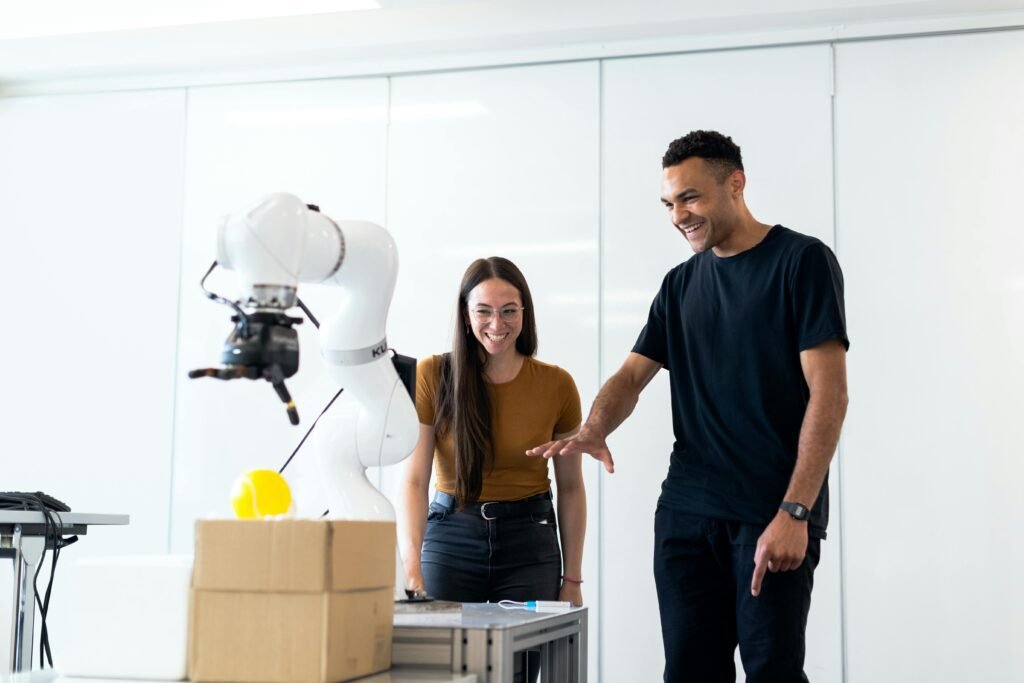
Human–AI Collaboration vs Full Automation
Full automation removes humans from the loop. Collaboration keeps humans in control.
Most experts agree that collaboration is safer, more flexible, and more sustainable than total automation.
The future of human and AI working together prioritizes partnership over replacement.
Long-Term Vision of Human–AI Collaboration
In the long term, human–AI collaboration will reshape society.
- Smarter cities
- Better healthcare systems
- More personalized education
- Enhanced creativity
AI becomes an extension of human capability rather than a threat.
The Role of Trust in Human–AI Collaboration
Trust is essential for collaboration.
Humans must trust AI outputs, and AI systems must be designed to earn that trust through accuracy, transparency, and reliability.
Trust will define the success of the human AI collaboration future.
Preparing for the Human–AI Collaborative Era
Preparation starts with mindset.
- Accept AI as a tool, not a rival
- Focus on uniquely human strengths
- Learn continuously
The future of human and AI working together favors proactive learners.
Final Thoughts on Human–AI Collaboration Future
The human AI collaboration future is not science fiction. It is already unfolding across industries and daily life. When humans and artificial intelligence work together, the result is greater efficiency, better decisions, and new forms of creativity.
AI alone is powerful, but human judgment gives it direction. Humans alone are creative, but AI amplifies their impact. Together, they represent the most promising path forward.
The future is not human or AI.
The future is human and AI—working together.