Have you ever wondered how your smartphone knows exactly where you are? Whether you are using maps, ordering food, checking the weather, or sharing your location with friends, your phone can pinpoint your position with surprising accuracy.
The question “how does your smartphone know your location” is more common than ever. Many people use location-based services daily, but very few truly understand how this technology works behind the scenes.
This article explains everything in simple, clear, and easy US English. You will learn how smartphones track location, what technologies are involved, how accurate they are, and what affects location accuracy. No technical background is required.
What Does “Location” Mean on a Smartphone?
When your smartphone shows your location, it is not guessing randomly. Your phone calculates its position using multiple technologies working together.
Your location usually includes:
- Latitude and longitude
- Approximate address or area
- Movement direction and speed (in some cases)
To understand how does your smartphone know your location, we must first understand the systems it uses.
The Main Technologies Smartphones Use to Know Your Location
Smartphones do not rely on just one method. Instead, they combine multiple location technologies to get the most accurate result.
The four main methods are:
- GPS (Global Positioning System)
- Mobile network (cell towers)
- Wi-Fi positioning
- Sensors and software algorithms
Each method plays a unique role.
How GPS Helps Your Smartphone Know Your Location
GPS is the most well-known location technology.
What Is GPS?
GPS stands for Global Positioning System. It is a network of satellites orbiting the Earth.
Your smartphone receives signals from these satellites and calculates its exact position.
How GPS Works on a Smartphone
- Satellites send signals with time and position data
- Your phone receives signals from multiple satellites
- The phone calculates distance using signal timing
- Location is determined using mathematical triangulation
This process explains a major part of how does your smartphone know your location.
GPS Accuracy
- Outdoors: Very accurate (often within a few meters)
- Indoors: Weak or unavailable
- Requires clear sky access
How Cell Towers Help Track Your Location
When GPS is weak or unavailable, your smartphone uses cell towers.
How Cell Tower Location Works
- Your phone connects to nearby cell towers
- The network estimates your location based on signal strength
- The more towers nearby, the better the accuracy
This method gives an approximate location, not an exact one.
When Cell Tower Location Is Used
- Inside buildings
- In cities with many towers
- When GPS is turned off
Cell tower tracking is another important answer to how does your smartphone know your location.
How Wi-Fi Helps Your Smartphone Know Your Location
Wi-Fi plays a big role, especially indoors.
How Wi-Fi Location Works
- Your phone detects nearby Wi-Fi networks
- Each Wi-Fi router has a known physical location
- Your phone compares signal strength
- Location is estimated using a Wi-Fi database
This method is surprisingly accurate in cities.
Why Wi-Fi Location Is Important
- Works indoors
- Faster than GPS
- Uses less battery
This is why your phone still knows your location even when GPS is off.
How Sensors Improve Location Accuracy
Modern smartphones contain multiple sensors that improve location tracking.
Important Sensors Include:
- Accelerometer (movement)
- Gyroscope (direction)
- Compass (orientation)
- Barometer (altitude)
These sensors help your phone understand:
- Whether you are walking or driving
- Direction of movement
- Floor level inside buildings
Sensors help smooth location updates and improve accuracy.
How Smartphones Combine All Methods Together
Your smartphone does not choose one method. It combines all available data.
This process is called location fusion.
Location Fusion Means:
- GPS for precision
- Wi-Fi for indoor accuracy
- Cell towers for backup
- Sensors for movement tracking
This combination explains clearly how does your smartphone know your location so reliably.
Why Location Accuracy Changes Sometimes
You may notice that location accuracy is not always perfect.
Common Reasons:
- Weak GPS signal
- Tall buildings (urban canyons)
- Poor internet connection
- Limited Wi-Fi networks
- Power-saving mode enabled
Accuracy improves when multiple location sources are available.
How Apps Access Your Location
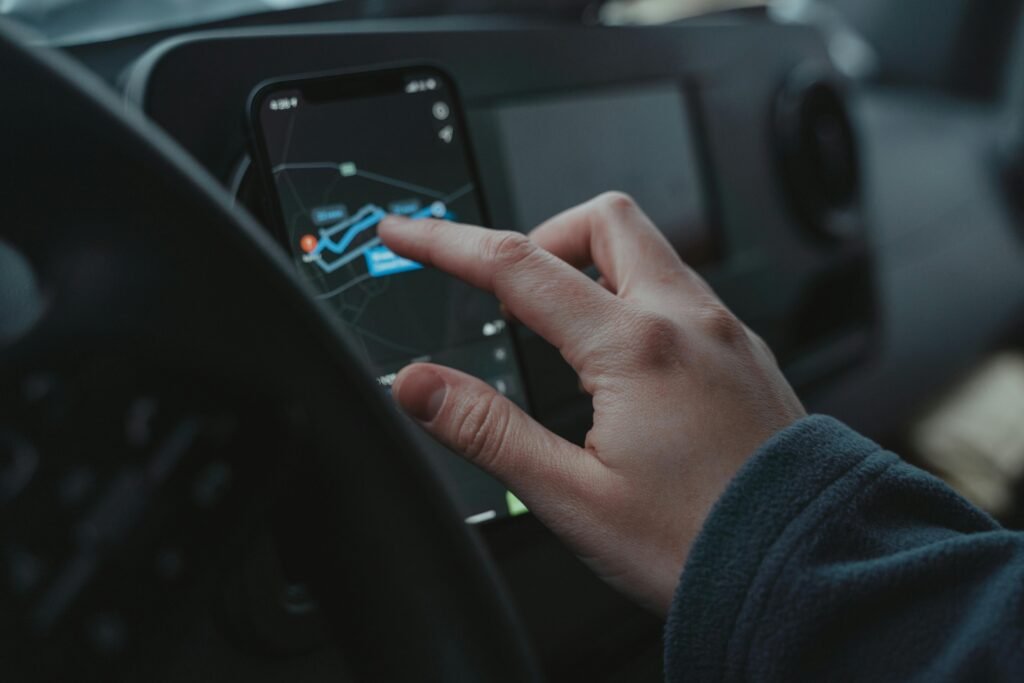
Apps do not automatically know your location. They must ask permission.
Location Permissions Types:
- Always allow
- Allow while using the app
- Ask every time
- Never allow
You control how apps use your location.
Why Smartphones Need Internet for Location
GPS does not require internet, but other methods do.
Internet Helps With:
- Faster satellite data
- Wi-Fi database access
- Cell tower location updates
- Map loading
This improves speed and accuracy.
Is Your Smartphone Tracking You All the Time?
Your smartphone does not constantly track you unless allowed.
Location tracking depends on:
- App permissions
- System settings
- Background activity
You can fully control this in your settings.
How to Improve Location Accuracy on Your Smartphone
If location feels inaccurate, you can improve it.
Simple Steps:
- Enable high-accuracy location mode
- Turn on Wi-Fi and mobile data
- Keep GPS enabled outdoors
- Update your phone software
These steps significantly improve results.
Can Smartphones Know Location Without GPS?
Yes.
Even without GPS, smartphones can still estimate location using:
- Wi-Fi
- Cell towers
- Sensors
However, accuracy will be lower.
How Location Is Used in Daily Life
Location services power many features:
- Navigation apps
- Weather updates
- Ride-sharing services
- Emergency services
- Fitness tracking
This shows why understanding how does your smartphone know your location is important.
Privacy Concerns and Location Data
Location data is sensitive information.
Important Privacy Facts:
- Apps must request permission
- You can revoke access anytime
- Location history can be deleted
- System-level controls exist
Being informed helps protect privacy.
How Location Works in Airplane Mode
In airplane mode:
- GPS may still work
- Wi-Fi and mobile networks are off
- Accuracy is limited
Location services become restricted.
The Future of Smartphone Location Technology
Location technology is improving rapidly.
Future Improvements Include:
- Better indoor accuracy
- Lower battery usage
- Faster location detection
- More privacy-focused systems
Smartphones will become even smarter.
Common Myths About Smartphone Location
Myth 1: Phones track you even when turned off
False. A powered-off phone cannot track location.
Myth 2: GPS needs internet
False. GPS works independently.
Myth 3: Location tracking is always exact
False. Accuracy varies by conditions.
How Location Accuracy Changes Indoors vs Outdoors
Many people notice that their smartphone location is very accurate outdoors but less precise indoors. This happens because different location technologies perform differently depending on the environment.
When you are outdoors, GPS signals from satellites reach your phone clearly. This allows your smartphone to calculate your location with high accuracy. However, indoors, walls, roofs, and metal structures weaken satellite signals. As a result, your smartphone relies more on Wi-Fi networks, Bluetooth signals, and nearby cell towers.
This is why how does your smartphone know your location becomes more complex when you move inside buildings like malls, airports, or offices.
Role of Bluetooth in Location Tracking
Bluetooth is another technology that helps smartphones determine location, especially in indoor spaces.
Many public places use Bluetooth beacons that constantly broadcast signals. When your phone detects these signals, it can estimate your position based on signal strength. This method is often used in shopping malls, museums, and large buildings.
Bluetooth-based tracking does not give exact coordinates like GPS, but it improves accuracy when satellite signals are weak.
How Location Data Is Calculated Step by Step
To understand how does your smartphone know your location, it helps to break the process into simple steps:
- Your phone collects signals from GPS satellites, Wi-Fi networks, cell towers, and sensors
- It measures signal strength, timing, and movement
- The operating system compares this data with known location databases
- An estimated location is calculated and updated in real time
This entire process happens within seconds, often without you noticing.
Why Location Sometimes Appears Incorrect
Even advanced smartphones can show incorrect location data at times.
Common reasons include:
- Weak GPS signals
- Poor internet connection
- Outdated Wi-Fi location databases
- Software bugs
- Disabled location services
If your location seems wrong, switching location mode to “High Accuracy” usually helps.
High Accuracy vs Battery Saving Location Mode
Most smartphones offer different location modes:
High Accuracy Mode
Uses GPS, Wi-Fi, mobile networks, and sensors together.
This provides the best results but consumes more battery.
Battery Saving Mode
Uses Wi-Fi and mobile networks only.
Battery-friendly but less precise.
Device Only Mode
Uses GPS only.
Works best outdoors.
Choosing the right mode affects how your smartphone knows your location and how accurate it is.
How Weather and Environment Affect Location Accuracy
Weather conditions can influence GPS accuracy. Heavy clouds, storms, or dense urban areas with tall buildings can block satellite signals.
This phenomenon, known as “urban canyon effect,” causes GPS signals to bounce off buildings, leading to small location errors.
That is why location accuracy is often better in open spaces.
Location Tracking Without Internet: Is It Possible?
Yes, smartphones can still estimate location without an internet connection.
GPS satellites do not require internet access. Your phone can calculate location using satellite signals alone. However, loading maps, updating location quickly, or improving accuracy requires internet access.
Without internet, how does your smartphone know your location becomes slower but still functional.
How Location Is Used by Emergency Services
Location services play a critical role in emergency situations.
When you make an emergency call, your smartphone can share your approximate location with emergency responders. This helps them reach you faster, even if you cannot explain where you are.
This feature has saved countless lives worldwide.
Can Location Be Tracked When GPS Is Off?
Even when GPS is turned off, some location estimation is still possible.
Wi-Fi networks, mobile towers, and Bluetooth signals can provide approximate location data. This is why many devices still show rough location even with GPS disabled.
However, accuracy is significantly reduced.
How Often Does Your Phone Update Location?
Location updates depend on:
- App settings
- Location mode
- Battery optimization
- Movement speed
Navigation apps update location frequently, while background apps may update less often to save battery.
Future of Smartphone Location Technology
Location technology is continuously improving.
Future advancements may include:
- More accurate satellite systems
- Better indoor positioning
- Lower battery consumption
- Faster location updates
As technology evolves, understanding how does your smartphone know your location will become even more fascinating.
Common Myths About Smartphone Location Tracking
Myth 1: Phones Track Location Even When Turned Off
This is not true. A powered-off phone cannot actively track location.
Myth 2: Location Tracking Is Always Exact
Location is an estimate, not an exact point.
Myth 3: Only GPS Is Used
Modern smartphones use multiple technologies together.
How to Improve Location Accuracy on Your Smartphone
You can improve accuracy by:
- Keeping location services enabled
- Using high accuracy mode
- Turning on Wi-Fi scanning
- Updating system software
These steps help your smartphone determine location more precisely.
How Location Services Impact Daily Life
Location services are deeply integrated into daily activities:
- Navigation and travel
- Weather updates
- Fitness tracking
- Ride-sharing apps
- Food delivery
Understanding how your smartphone knows your location helps you use these services more effectively.
Final Thoughts
Smartphone location tracking is a combination of advanced technologies working together seamlessly. GPS satellites, Wi-Fi networks, mobile towers, sensors, and software algorithms all play a role.
The next time your phone shows your exact position on a map, remember that a powerful system is working behind the scenes.
Final Conclusion
So, how does your smartphone know your location?
It gathers signals from multiple sources, processes them intelligently, and delivers real-time results with impressive accuracy.
This technology continues to evolve, making smartphones smarter, safer, and more useful in everyday life.