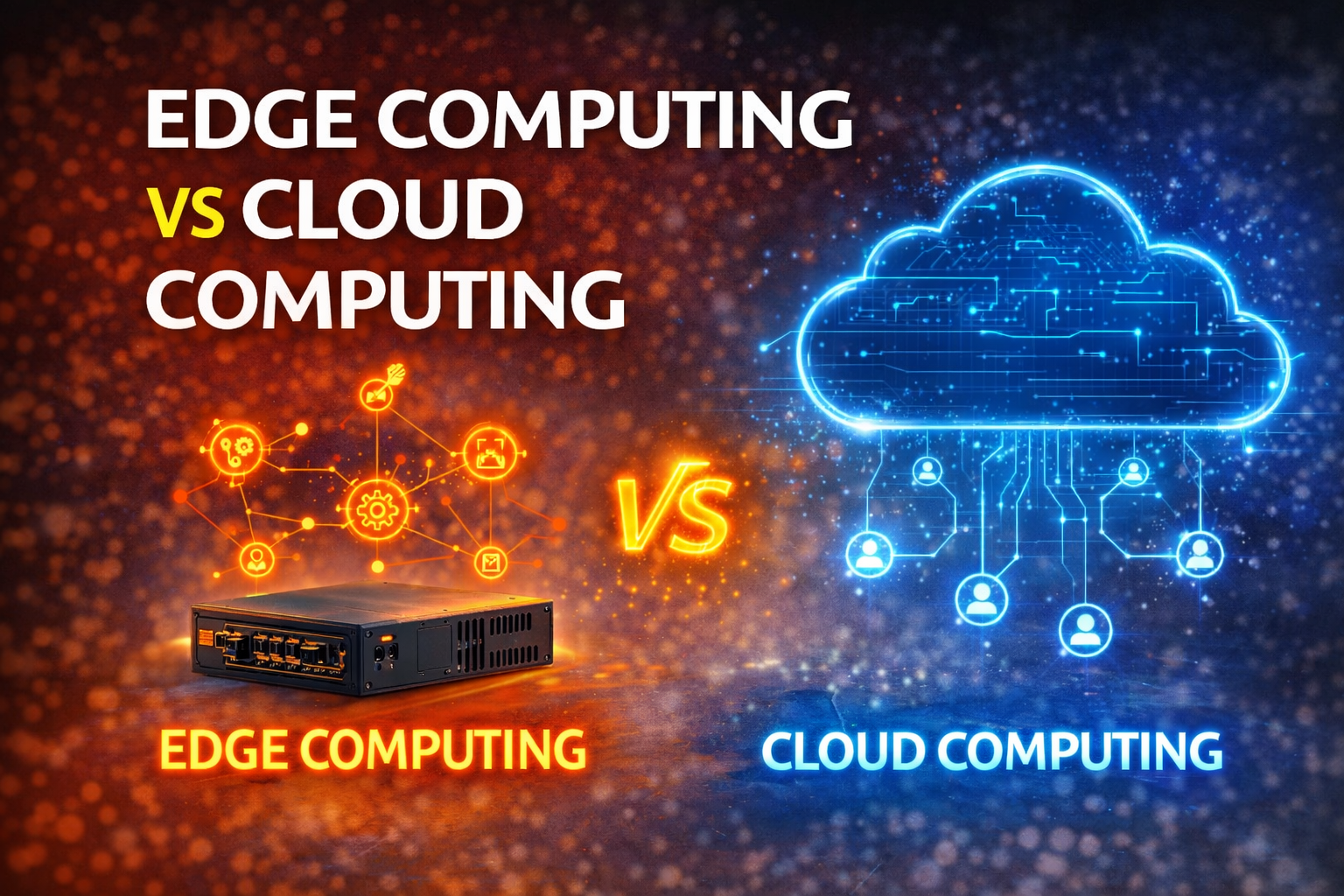
As technology continues to evolve at an unprecedented pace, the way data is processed, stored, and delivered is undergoing a major transformation. In 2026, businesses, developers, and enterprises are increasingly comparing edge computing vs cloud computing to decide which model best fits their performance, security, and scalability needs.
This article provides a complete, in-depth, and easy-to-understand explanation of edge computing vs cloud computing 2026, covering definitions, differences, real-world use cases, benefits, limitations, and future trends. If you want a clear picture of how these technologies will shape the future, this guide is for you.
What Is Cloud Computing?
Cloud computing is a model where data processing, storage, and computing power are handled in centralized data centers. These data centers are typically located far from the end user and are accessed through the internet.
In cloud computing, users send data to remote servers, where it is processed and stored. The results are then sent back to the user’s device.
Key Characteristics of Cloud Computing
- Centralized infrastructure
- Internet-dependent access
- Scalable storage and computing power
- Cost-effective for large workloads
- Ideal for data-intensive applications
Cloud computing has dominated the digital world for more than a decade, powering websites, applications, analytics platforms, and enterprise software.
What Is Edge Computing?
Edge computing is a decentralized computing model where data is processed closer to the source, such as on local devices, sensors, gateways, or nearby servers.
Instead of sending all data to a centralized cloud, edge computing processes data at or near the point where it is generated.
Key Characteristics of Edge Computing
- Decentralized data processing
- Low latency
- Reduced bandwidth usage
- Faster real-time responses
- Improved data privacy
In the edge computing vs cloud computing 2026 debate, edge computing is gaining attention because of the growing demand for real-time processing.
Why Edge Computing Is Growing Rapidly in 2026
The explosion of IoT devices, smart cities, autonomous vehicles, and AI-powered applications has pushed traditional cloud models to their limits.
Edge computing addresses problems such as:
- Network latency
- Bandwidth congestion
- Real-time decision-making
- Data privacy concerns
In 2026, edge computing is no longer optional for many industries—it is becoming essential.
Edge Computing vs Cloud Computing 2026: Core Differences
Below is a clear comparison table to understand edge computing vs cloud computing 2026 at a glance.
| Feature | Edge Computing | Cloud Computing |
|---|---|---|
| Data Processing Location | Near the data source | Centralized data centers |
| Latency | Very low | Higher due to distance |
| Internet Dependency | Minimal | High |
| Scalability | Limited but fast | Highly scalable |
| Security | Data stays local | Data travels over internet |
| Cost Structure | Higher initial setup | Pay-as-you-go |
| Best For | Real-time applications | Large-scale data processing |
Performance Comparison in 2026
Performance is one of the biggest deciding factors in edge computing vs cloud computing 2026.
Edge Computing Performance
Edge computing excels in scenarios where milliseconds matter. Processing data locally reduces delays caused by network transmission.
Cloud Computing Performance
Cloud computing handles massive datasets efficiently but may struggle with latency-sensitive tasks.
In 2026, many systems combine both models to balance performance and scalability.
Use Cases of Edge Computing in 2026
Edge computing is transforming multiple industries by enabling real-time processing.
Common Edge Computing Use Cases
- Autonomous vehicles
- Smart factories
- Healthcare monitoring systems
- Augmented and virtual reality
- Smart traffic management
These applications require instant responses that cloud computing alone cannot always provide.
Use Cases of Cloud Computing in 2026
Despite the rise of edge computing, cloud computing remains essential.
Common Cloud Computing Use Cases
- Big data analytics
- Machine learning model training
- Enterprise software platforms
- Content delivery networks
- Backup and disaster recovery
In the edge computing vs cloud computing 2026 comparison, cloud computing still dominates large-scale data operations.
Security and Privacy: Edge vs Cloud
Security is a major concern in modern computing environments.
Edge Computing Security
- Data processed locally
- Reduced exposure to cyberattacks
- Better compliance with privacy regulations
Cloud Computing Security
- Advanced security infrastructure
- Centralized control
- Higher risk during data transmission
In 2026, organizations often choose edge computing for sensitive data and cloud computing for non-critical workloads.
![pexels media 25626435[1]](https://technomee.com/wp-content/uploads/2025/12/pexels-media-256264351-1024x576.jpeg)
Cost Analysis in 2026
Cost plays a critical role when evaluating edge computing vs cloud computing 2026.
Edge Computing Costs
- Higher upfront investment
- Hardware and maintenance expenses
- Lower long-term bandwidth costs
Cloud Computing Costs
- Subscription-based pricing
- Lower initial investment
- Costs increase with usage
Choosing the right model depends on workload type and scale.
Edge Computing vs Cloud Computing for AI and Machine Learning
Artificial intelligence is reshaping both models.
Edge AI
- Real-time inference
- Reduced data transfer
- Faster decision-making
Cloud AI
- Model training
- Massive data processing
- High computational power
In 2026, AI systems often use edge computing for execution and cloud computing for training.
Scalability and Flexibility
Scalability is another key factor in edge computing vs cloud computing 2026.
Cloud computing offers near-unlimited scalability, making it ideal for growing businesses. Edge computing, while less scalable, provides unmatched speed and responsiveness.
Hybrid architectures combine the strengths of both.
Hybrid Computing: The Future Model
The future of computing in 2026 is not edge or cloud—it is edge plus cloud.
Hybrid models allow:
- Real-time processing at the edge
- Centralized analytics in the cloud
- Optimized cost and performance
This approach is becoming the industry standard.
Challenges of Edge Computing
Despite its advantages, edge computing has limitations:
- Complex deployment
- Hardware management
- Limited processing power compared to cloud
These challenges are being addressed through improved hardware and management platforms.
Challenges of Cloud Computing
Cloud computing also faces challenges:
- Latency issues
- Data privacy concerns
- Dependence on internet connectivity
These limitations explain why edge computing is growing rapidly.
Which Is Better in 2026: Edge or Cloud?
There is no single winner in edge computing vs cloud computing 2026.
- Choose edge computing for real-time, latency-sensitive tasks
- Choose cloud computing for large-scale data storage and analytics
- Choose hybrid models for balanced performance
The best choice depends on application requirements.
Future Trends in Edge and Cloud Computing
By 2026, the following trends are shaping the industry:
- Growth of edge AI
- Increased hybrid deployments
- Stronger focus on data privacy
- Smarter workload distribution
Both technologies will continue to evolve together.
Real-World Use Cases in 2026 (Edge vs Cloud)
By 2026, both edge computing and cloud computing are no longer experimental technologies. They are already deeply embedded in daily life, businesses, and industries. The real difference comes from where and how data is processed.
Smart Cities
Smart traffic lights, surveillance systems, and environmental sensors generate massive amounts of data every second. Sending all of this data to the cloud would cause delays and high costs.
In 2026, edge computing processes traffic data locally to adjust signals instantly, while the cloud stores historical data for long-term analysis and planning.
Healthcare Systems
Medical devices like heart monitors, wearable health trackers, and emergency diagnostic tools rely heavily on speed and accuracy.
Edge computing enables real-time alerts for critical patients, while cloud computing manages patient records, analytics, and AI-driven predictions.
Autonomous Vehicles
Self-driving cars cannot afford latency. Decisions must be made in milliseconds.
That is why edge computing handles real-time decisions such as braking or obstacle detection, while cloud computing updates maps, software, and machine learning models.
![pexels media 5996698[1]](https://technomee.com/wp-content/uploads/2025/12/pexels-media-59966981-1024x684.jpeg)
Why Edge Computing Is Growing Faster Than Cloud in 2026
Cloud computing is mature. Edge computing is growing.
The main reason is latency sensitivity. Modern applications demand instant responses.
Key Growth Drivers
- Explosion of IoT devices
- 5G and upcoming 6G networks
- Real-time AI applications
- Data privacy regulations
- Demand for ultra-low latency
In many cases, cloud alone is no longer enough.
Limitations of Edge Computing in 2026
Even though edge computing is powerful, it is not perfect.
Main Challenges
- Limited storage capacity
- Higher maintenance complexity
- Hardware dependency
- Security management at multiple locations
This is why most companies in 2026 do not choose edge computing instead of cloud, but rather edge computing with cloud.
Limitations of Cloud Computing in 2026
Cloud computing also has its own weaknesses.
Major Drawbacks
- Latency issues
- Internet dependency
- Data privacy concerns
- Rising long-term costs
For applications that require immediate responses, cloud computing alone is no longer sufficient.
Edge Computing vs Cloud Computing 2026: Cost Comparison
Cost is one of the most searched aspects of edge computing vs cloud computing 2026.
Cost Reality
- Cloud computing has low initial cost but higher recurring expenses
- Edge computing requires higher upfront investment but reduces data transfer costs
In 2026, businesses calculate total cost of ownership, not just monthly bills.
Security and Privacy Comparison in 2026
Edge Computing Security
Data stays closer to the source, reducing exposure. This improves privacy but increases responsibility for device-level security.
Cloud Computing Security
Centralized security, strong encryption, and compliance certifications. However, centralized systems become high-value targets.
In 2026, hybrid security models are the most trusted.
AI and Machine Learning: Edge vs Cloud in 2026
Artificial Intelligence is the biggest driver of computing evolution.
Edge AI
- Real-time inference
- Offline capability
- Low latency
- Ideal for smart devices
Cloud AI
- Large-scale model training
- High computing power
- Big data analytics
In 2026, training happens in the cloud, execution happens at the edge.
Hybrid Computing: The Future Standard
The debate of edge computing vs cloud computing 2026 is not about replacement. It is about integration.
Hybrid Model Benefits
- Speed from edge
- Scalability from cloud
- Better cost efficiency
- Improved reliability
Most enterprise architectures in 2026 are hybrid by default.
Comparison Table: Edge Computing vs Cloud Computing (2026)
| Feature | Edge Computing | Cloud Computing |
|---|---|---|
| Data Processing | Near data source | Centralized |
| Latency | Ultra-low | Medium |
| Internet Dependency | Low | High |
| Scalability | Limited | Massive |
| Cost Structure | Higher upfront | Pay-as-you-go |
| Privacy | High | Medium |
| Best Use | Real-time apps | Data analytics |
Which Is Better for Startups in 2026?
For startups, the decision depends on the use case.
- SaaS startups → Cloud computing
- IoT or AI hardware startups → Edge + Cloud
- Consumer apps → Cloud first, edge later
Understanding this balance is crucial for long-term growth.
Impact on Jobs and Skills in 2026
Edge computing vs cloud computing 2026 is also reshaping careers.
High-Demand Skills
- Distributed systems
- Network security
- Edge AI deployment
- Cloud architecture
- Hybrid infrastructure management
Professionals who understand both technologies have the highest demand.
How Businesses Choose Between Edge and Cloud
Companies in 2026 ask these questions:
- Is real-time response critical?
- How sensitive is the data?
- What are the scalability needs?
- What is the long-term cost impact?
Answers decide the architecture.
![pexels media 25626438[1]](https://technomee.com/wp-content/uploads/2025/12/pexels-media-256264381-1024x576.jpeg)
Edge Computing vs Cloud Computing 2026: Final Verdict
There is no winner. There is only the right choice for the right problem.
Edge computing solves speed and latency issues.
Cloud computing solves scale and complexity.
Together, they form the backbone of modern digital systems.
Final Conclusion
The comparison of edge computing vs cloud computing 2026 reflects how technology is evolving toward smarter, faster, and more distributed systems.
In 2026, successful digital platforms are not choosing one over the other. They are combining both to create powerful, efficient, and secure solutions.
Understanding this difference is essential for developers, businesses, and technology enthusiasts preparing for the future.