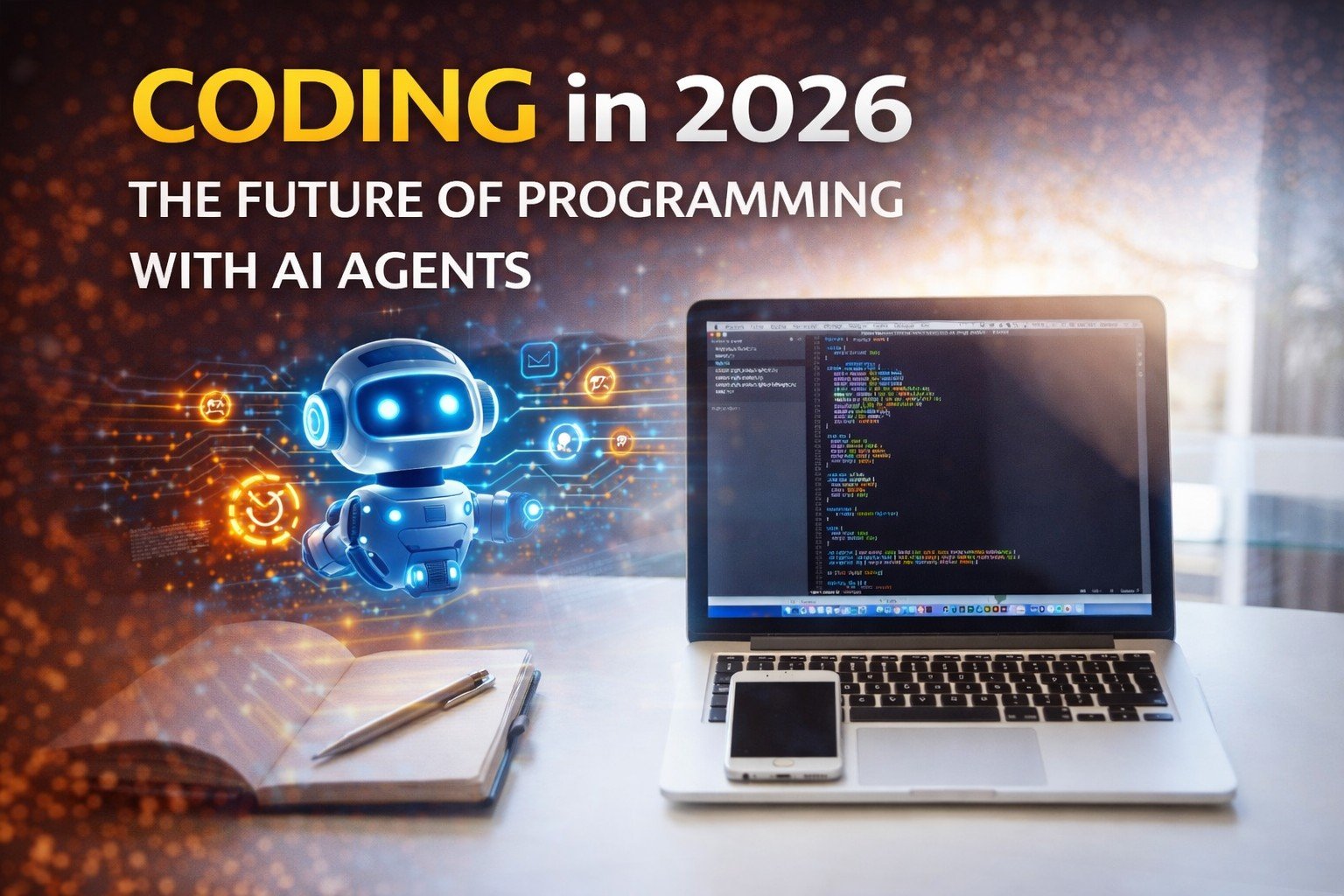
Programming is changing faster than ever before. Traditional coding, where developers write every single line manually, is slowly evolving into something more intuitive, creative, and intelligent. This new approach is known as vibe coding, and by 2026, it is expected to become a mainstream way of building software.
Vibe coding in 2026 is not about replacing developers. It is about changing how humans and machines work together. Instead of focusing on syntax and repetitive tasks, developers focus on ideas, logic, and user experience, while AI agents handle execution.
This article explains everything about vibe coding in 2026 — what it is, how it works, why it matters, and how it will shape the future of programming.
What Is Vibe Coding?
Vibe coding is a modern style of programming where developers communicate intent, ideas, and logic in natural language or high-level instructions, and AI systems convert those ideas into working code.
Instead of writing hundreds of lines of boilerplate code, developers describe what they want to build, and AI agents generate, refine, test, and optimize the code.
In simple words, vibe coding is coding by intention, not by syntax.
Why Vibe Coding Is Becoming Popular
Several factors are driving the rise of vibe coding:
- Rapid advancements in artificial intelligence
- Increasing complexity of software systems
- Demand for faster development cycles
- Shortage of skilled developers
- Need for automation in repetitive coding tasks
By 2026, companies will prioritize speed, scalability, and creativity. Vibe coding fits perfectly into this demand.
How Vibe Coding in 2026 Works
Vibe coding in 2026 is powered by AI agents that understand context, logic, and goals.
Step-by-Step Workflow
- The developer explains the goal in plain language
- AI agent interprets requirements
- Code is generated automatically
- AI tests and debugs the code
- Developer reviews and refines output
This process reduces development time dramatically.
The Role of AI Agents in Vibe Coding
AI agents are the backbone of vibe coding in 2026. These agents act like intelligent coding assistants that understand both technical and business logic.
What AI Agents Can Do
- Generate frontend and backend code
- Fix bugs automatically
- Optimize performance
- Suggest better architecture
- Write documentation
This allows developers to focus on creativity and decision-making.
Vibe Coding vs Traditional Coding
| Feature | Traditional Coding | Vibe Coding in 2026 |
|---|---|---|
| Writing code | Manual | AI-assisted |
| Speed | Slow | Extremely fast |
| Focus | Syntax & logic | Ideas & outcomes |
| Errors | Human-made | AI-corrected |
| Learning curve | Steep | Easier |
This comparison shows why vibe coding will dominate software development in 2026.
Benefits of Vibe Coding in 2026
Faster Development
Projects that used to take months can be completed in weeks or even days.
Lower Entry Barrier
Non-traditional developers can build software without deep coding knowledge.
Better Productivity
Developers spend more time solving problems instead of writing repetitive code.
Improved Code Quality
AI agents continuously test and optimize code.
Vibe Coding and the Future of Programming
The future of programming is not about memorizing syntax. It is about understanding systems, users, and logic.
In software development in 2026, developers will act more like architects and strategists rather than pure coders.
Vibe coding supports this shift by handling technical execution automatically.
Industries That Will Use Vibe Coding the Most
Vibe coding in 2026 will impact multiple industries:
- Web and app development
- SaaS platforms
- Game development
- AI and data tools
- Automation software
Any industry that relies on software will benefit from AI-powered development.
Is Vibe Coding Safe and Reliable?
One common concern is reliability. In 2026, AI systems will be trained on massive datasets and validated through advanced testing.
Safety Measures
- Automated testing pipelines
- Human review checkpoints
- Version control integration
- Security audits by AI
These systems make vibe coding both safe and scalable.
Skills Needed for Vibe Coding in 2026
Even though AI does the coding, human skills are still essential.
Important Skills
- Logical thinking
- Problem-solving
- System design
- Clear communication
- Basic programming understanding
Vibe coding does not remove the developer — it upgrades the developer.
How Vibe Coding Improves Creativity
Traditional coding limits creativity due to technical constraints. Vibe coding removes these limits.
Developers can experiment faster, test ideas quickly, and iterate without worrying about low-level implementation details.
This leads to better products and innovative solutions.
Vibe Coding and AI-Powered Development Tools
By 2026, most development environments will include AI-powered coding tools by default.
These tools will:
- Understand project context
- Maintain coding style consistency
- Predict future requirements
- Refactor code automatically
This makes coding smoother and more intuitive.
Challenges of Vibe Coding
While powerful, vibe coding has challenges:
- Over-reliance on AI
- Need for clear instructions
- Ethical concerns
- Data privacy
However, these challenges are manageable with proper guidelines and human oversight.
Will Vibe Coding Replace Developers?
No. Vibe coding will not replace developers. It will replace outdated workflows.
Developers who adapt to coding with AI will be more valuable than ever.
How Companies Will Adopt Vibe Coding in 2026
Companies will integrate vibe coding gradually:
- Start with internal tools
- Use AI for testing and debugging
- Expand to full product development
- Optimize workflows
This gradual adoption ensures stability and trust.
Vibe Coding and Job Market in 2026
The job market will shift from “coder” to “AI-assisted developer”.
New roles will emerge:
- AI workflow designer
- Prompt-based developer
- System architect
- Automation engineer
This creates new opportunities instead of reducing them.
Why Vibe Coding Is Discover-Friendly Content
Topics like vibe coding in 2026 perform well on platforms like Google Discover because:
- It is future-focused
- It is technology-driven
- It sparks curiosity
- It appeals to a global audience
This makes it ideal for long-term traffic.
Vibe Coding in 2026: The Future of How Software Will Be Built
Technology is changing faster than ever, and coding is no longer limited to typing complex syntax for hours. In 2026, a new concept is reshaping the way developers, startups, and even non-technical creators build software. This concept is known as vibe coding in 2026.
Vibe coding is not just a trend. It represents a shift in mindset, tools, and workflow. Instead of focusing only on lines of code, developers focus on intent, flow, creativity, and results. Coding becomes more human, more intuitive, and more aligned with how people actually think.
This article explains everything about vibe coding in 2026 — what it is, how it works, why it matters, and how it will change the future of software development.
What Is Vibe Coding?
Vibe coding is a modern approach to software development where the developer focuses on ideas, outcomes, and user experience, while intelligent systems handle much of the technical complexity.
Instead of writing every line manually, developers describe what they want to build. Tools powered by AI, automation, and smart frameworks convert that intent into working code.
In simple words, vibe coding means:
- Less syntax stress
- More creative thinking
- Faster execution
- Better alignment with product goals
By 2026, vibe coding becomes a mainstream workflow rather than an experimental idea.
Why Vibe Coding Is Becoming Popular in 2026
Traditional coding still works, but it has limitations. Projects take longer, require large teams, and demand deep technical expertise for even simple features.
Vibe coding in 2026 solves these problems by changing how developers interact with technology.
Key Reasons for Its Growth
- Faster product development
- Lower learning curve
- Reduced burnout for developers
- More focus on innovation
- Better collaboration between technical and non-technical teams
Companies want speed and flexibility, and vibe coding delivers both.
How Vibe Coding Works in 2026
Vibe coding is built on a combination of advanced technologies working together seamlessly.
Core Components of Vibe Coding
- AI-assisted code generation
- Natural language instructions
- Visual and modular workflows
- Real-time feedback and testing
- Automated optimization
A developer can describe an idea, refine it step by step, and deploy a working product without writing every detail manually.
Traditional Coding vs Vibe Coding in 2026
| Feature | Traditional Coding | Vibe Coding in 2026 |
|---|---|---|
| Learning curve | Steep | Beginner-friendly |
| Speed | Slower | Extremely fast |
| Focus | Syntax & logic | Intent & experience |
| Collaboration | Limited | Highly collaborative |
| Creativity | Constrained | Encouraged |
This shift explains why vibe coding in 2026 is gaining massive attention across the tech industry.
Who Can Use Vibe Coding?
One of the biggest advantages of vibe coding is accessibility.
Vibe Coding Is Ideal For:
- Software developers
- Startup founders
- Indie hackers
- Product designers
- Content creators
- Non-technical entrepreneurs
You no longer need to be a hardcore programmer to build digital products.
Vibe Coding and AI Agents
AI agents play a major role in vibe coding in 2026. These agents understand instructions, suggest improvements, detect bugs, and even optimize performance automatically.
Instead of acting as tools, AI agents act like collaborators.
They can:
- Generate backend logic
- Design APIs
- Improve UI flows
- Fix errors automatically
- Suggest scalability improvements
This changes the role of developers from “coders” to “builders”.
Step-by-Step: How a Project Is Built Using Vibe Coding
Step 1: Define the Idea
The creator explains the product idea in plain English.
Step 2: Choose the Vibe
The desired style, performance level, and user experience are defined.
Step 3: Generate the Structure
The system creates the project structure automatically.
Step 4: Refine Features
Features are added or removed using natural instructions.
Step 5: Test and Deploy
Testing, debugging, and deployment happen with minimal manual effort.
This workflow makes vibe coding in 2026 extremely efficient.
Benefits of Vibe Coding in 2026
Vibe coding offers advantages that go beyond speed.
Major Benefits
- Saves development time
- Reduces cost
- Encourages creativity
- Improves work-life balance
- Enables rapid experimentation
Developers can focus on solving problems rather than fighting syntax errors.
Challenges of Vibe Coding
Despite its benefits, vibe coding is not without challenges.
Some concerns include:
- Over-dependence on AI
- Limited control for advanced customization
- Security risks if not reviewed properly
- Need for human oversight
In 2026, successful teams use vibe coding with responsibility, not blindly.
Vibe Coding and Job Market in 2026
Many people wonder if vibe coding will replace developers. The answer is no.
Instead, it changes the skill set required.
Skills That Matter More Now
- Problem-solving
- Product thinking
- System design
- Creativity
- Communication
Vibe coding in 2026 rewards thinkers, not just typists.
Industries Using Vibe Coding in 2026
Vibe coding is not limited to software startups.
It is widely used in:
- Web and app development
- SaaS platforms
- E-commerce
- Education technology
- Healthcare systems
- Automation tools
Its flexibility makes it suitable for almost any industry.
Why Vibe Coding Is Discover-Friendly Content
Topics like vibe coding in 2026 perform well on discovery platforms because they:
- Are future-focused
- Solve real problems
- Spark curiosity
- Encourage discussion
This makes them ideal for long-form, high-CTR blog content.
Best Practices for Vibe Coding in 2026
To use vibe coding effectively:
- Always review generated code
- Test thoroughly
- Understand the logic, not just results
- Combine creativity with structure
Human judgment remains essential.
The Future Beyond 2026
Vibe coding will continue to evolve. By the end of the decade, coding may feel more like designing ideas than writing instructions.
Human creativity and machine intelligence will work together, not compete.
Final Thoughts
Vibe coding in 2026 represents a major shift in how technology is created. It lowers barriers, speeds up innovation, and empowers more people to build digital products.
It does not remove the need for skill or thinking. Instead, it amplifies human potential.
As technology continues to evolve, vibe coding stands as a clear sign that the future of development is not just technical — it is creative, intuitive, and human-centered.